

Bárbara Serra on The Shortcomings in Food Factory Training
Training plays a vital role in UK food manufacturing. It supports food safety, quality, efficiency, and compliance. Despite this, many factories continue to struggle with how training is delivered and applied in practice.
Recent industry research highlights persistent skills shortages across technical, quality, and production roles. In tandem with these challenges, factory environments have become more complex. Automation, multilingual workforces, shorter production runs, and tighter regulations have increased the demands on operators. Training approaches, however, have not kept pace.
In many businesses, training has become compliance-led rather than capability-focused. Procedures are written, signed, and filed, but real understanding on the line is often limited. This means that, should a problem arise, responsibility is frequently placed on employees instead of questioning whether the training itself was effective.
To get a better understanding of these challenges, we spoke to Bárbara Serra, a Food Safety Compliance Consultant and BRCGS Approved Trainer Partner. Bárbara has worked extensively with food manufacturers across the UK and Europe, and has supported businesses to improve food safety quality systems and operational performance.
The State of Play in Food Factory Training
Bárbara’s experience gives her a clear view of how training is currently approached on the ground and where it goes wrong. She explains that one of the biggest issues is how training is perceived.
“Nowadays, a lot of food training is a tick-box exercise. Things are done because they have to be done, not because people have thought about the benefits or the long-term outcomes of investing in training.”
Bárbara highlights that training is often judged too quickly. Businesses expect immediate results, when in reality, the most meaningful training delivers value over time.
“With training, you don’t always see instant results. It’s long-term. But when things go wrong, the first reaction is often to blame the employee.”
In her work, Bárbara regularly carries out root cause analysis following quality or safety issues. Time and again, those investigations lead back to training.
“Managers will say, ‘The staff have been trained.’ But when you look closer, what that sometimes means is that a procedure exists, it was handed over, and the employee signed to say they received it. Sometimes they haven’t read it properly. They’ve signed for compliance.”
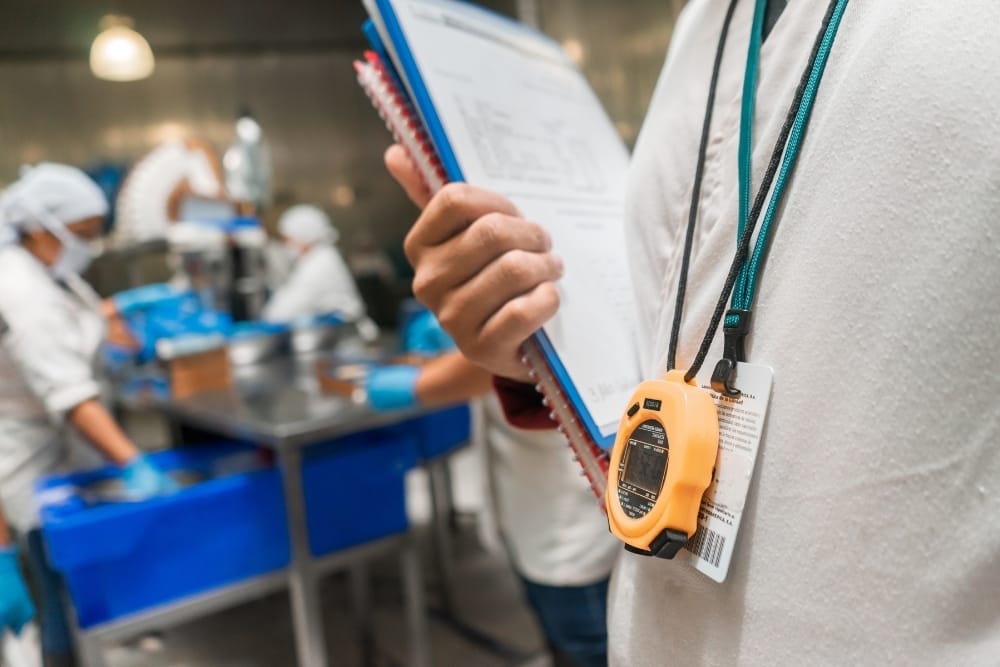
This approach creates a false sense of security.
The paperwork is complete, but the understanding is not. Bárbara is clear that effective training is not about documents. It is about people.
“Training should be about working with the person, building their skill set, and engaging them in what they’re doing.”
She also challenges the assumption that anyone can train others.
“Not everybody can be a trainer. Teaching is a skill in itself. Some people are natural communicators, observers, and mentors. Others need those skills to be developed.”
Rather than defaulting to seniority, Bárbara told us how businesses should actively identify their training champions.
“Companies need to observe their teams and look for people with the right communication and adaptability skills. Those are the people who should be training others.”
Time is another common barrier.
“The excuse is always that there’s no time. Production is too busy, so people can’t come off the line.”
Bárbara hears the same concern repeatedly, but argues that this is based on a narrow view of what training looks like.
“There’s a perception that training means classrooms. It doesn’t. People can learn on the job through coaching, mentoring, and shadowing. Training doesn’t have to stop production to be effective.”
She gives a stark example of the disconnect between leadership and shop-floor reality.
“I once had a Head of Operations say to me, ‘How difficult is it to put a product in a package?’ But they were running 200 different products, across multiple categories, with different languages, labels, and quality checks.”
Expecting operators to perform consistently in that environment without proper training is unrealistic.
“The person on the line isn’t just packing. They’re also checking quality, spotting issues, and making decisions. That capability only comes from training.”
Communication, Bárbara stresses, is fundamental.
“Simple things need to be explained properly. People need to understand what they’re doing, why they’re doing it, and the consequences if things go wrong.”
She advocates for collaborative learning, where employees are encouraged to discuss what they have learned and share their understanding.
“Education needs to come from the top of the organisation down to the shop floor. Leadership needs to see training as an investment, not a cost.”
Accessibility is another critical issue, particularly in diverse workforces.
“Visual training is incredibly powerful. Step-by-step videos help embed knowledge, especially for multilingual teams.”
As a non-native English speaker herself, Bárbara understands the challenge.
“People might be keen and capable, but they struggle with language. That doesn’t make them unmotivated. It means the training hasn’t been designed for them.”
She recalls working with a factory where an operator could not explain an issue because they did not speak English, despite the recruitment agency claiming language requirements had been met.
“That’s a box-ticking mindset again. Different communities have different access to English. Training has to be inclusive.”

Looking for Food Factory Training that Delivers Consistent Results?
Foodability is a practical online food factory training solution designed specifically for fast-paced packing environments. It helps manufacturers tackle downtime, training inconsistencies, language barriers, and operational errors without pulling people off the line unnecessarily.
By delivering clear, visual, bite-sized training modules focused on real-world tasks, Foodability helps businesses build genuine competence and confidence across their teams. The result is better-skilled operators, stronger food safety awareness, improved productivity, reduced waste, and more consistent quality.
If you want to see how a more practical, accessible approach to food manufacturing training could support your factory, get in touch with Foodability to find out more.
FAQs
Why do traditional training methods struggle in food factories?
Because they often rely on documents and classroom sessions that don’t match how people actually work and learn on production lines.
How can training support productivity as well as compliance?
By focusing on practical skills that help operators spot issues early, work efficiently, and reduce errors during live production.
Is online training suitable for hands-on factory roles?
Yes, when it is visual, task-focused, and designed to complement on-the-job learning rather than replace it.
How can training be made more inclusive for diverse teams?
Using clear visuals, simple language, and flexible delivery times helps ensure everyone can engage with and retain information.
What should businesses look for in effective training solutions?
Practical relevance, ease of access, measurable outcomes, and the ability to support real operational challenges rather than just paperwork.