
Reducing Food Factory Changeover & Downtime
Every minute a production line sits idle costs money.
It could be something as apparently minor as a weigher being set up incorrectly or an operator who’s not been trained in the changeover procedure. Either way, food production downtime is one of the biggest drags on profitability in the industry, and much of it is entirely avoidable. It all starts with the training.
Why Food Factory Changeover Takes Longer Than It Should
Your Equipment Might Not be the Problem
In most factories, food factory changeover delays aren’t generally caused by broken machinery or bad luck as much as by inconsistency.
If different operators work in different ways, then it’s much more difficult for a new starter to pick up the skills they need to. When there’s no standardised method embedded across the team, every changeover becomes a guessing game.
In packing environments with high staff turnover, that inconsistency compounds over time. It rarely shows up in one dramatic failure. It shows up in the slow, steady bleed of food production downtime that nobody quite tracks back to its source.
Some sectors see food production downtime rates as high as 50%.
Most of that is directly linked to human error and training gaps, not mechanical failure. If you’re looking for where the efficiency losses in your factory are coming from, that’s a good place to start.
Standardisation Is the Foundation of Food Processing Efficiency
Define It Before You Fix It
You can’t reduce food factory changeover time if the process isn’t clearly defined. Every step needs to be documented, agreed upon, and trained consistently.
That means changeover sequences that are the same every time and clearly defined roles so there’s no ambiguity during line transitions, as well as a reliable way to verify that operators genuinely understand what they’re doing.
A Briefing Is Not Training
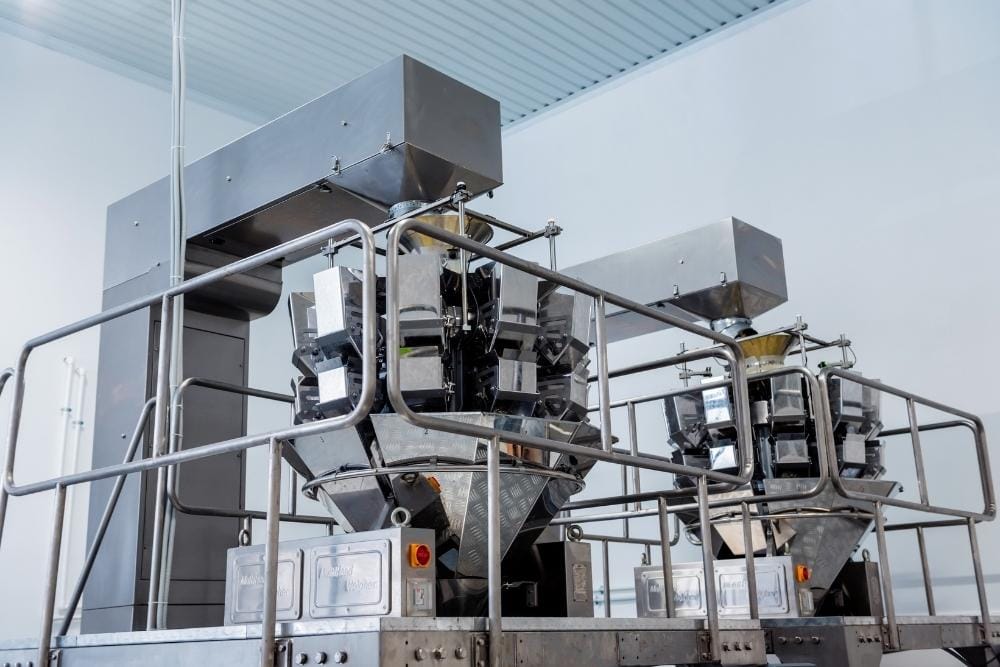
Telling someone how to set up a multihead weigher once, on their first day, in a noisy factory, is not training. Genuine competence comes from structured, repeated learning. That’s where most factories are still falling short on food processing efficiency.
Not necessarily through any lack of effort, but because the training model they’re using simply wasn’t built for the environment they’re working in.
Ready to Cut Your Food Factory Changeover Times?
If food production downtime keeps appearing on your shift reports, it’s worth asking whether your training is actually solving it. Get in touch with the Foodability team to see how practical online modules deliver results from day one.
This Makes a Strong Case for Micro-Module Learning
Breaking training down into bite-sized modules that target specific tasks is one of the most effective ways to cut food factory changeover time. New starters build competency in stages rather than being overwhelmed on day one.
For experienced staff, previous modules can be revisited as refreshers. Because progress is measurable, managers can actually see where the gaps are before those gaps show up as food production downtime.
Removing the Language Barrier
In workforces where language differences make classroom training more complex, a well-designed e-learning structure sidesteps a lot of those challenges. Clear visuals and practical demonstrations mean food processing efficiency improves across the board, regardless of background or first language.
Food Production Downtime Leads to an Increase in Waste
Food production downtime and food manufacturing waste tend to get treated as separate issues, but they’re linked by definition.
When changeovers run badly, product gets wasted. Lines get flushed unnecessarily. Incorrect setup produces misweights and rejected batches, and every unplanned stoppage carries an energy cost on top of the lost output.
Training makes a huge difference in managing this challenge.
Well-trained operators make better decisions in real time and can spot issues earlier and correct them faster because they understand the process, not just the procedure they’ve been told to follow. That shift from surface-level compliance to genuine understanding is what drives lasting reductions in food manufacturing waste, and it’s harder to achieve through traditional training than most managers expect.
Building a Culture of Food Processing Efficiency
Reducing food factory changeover time isn’t something you fix once and move on from. The operations that sustain real improvements are the ones in which operators understand why changeover speed matters and how their role affects the whole line.
It’s important to note that this understanding doesn’t come from a laminated sheet on the wall. It comes from training grounded in what operators actually experience during a shift. Practical, immediately applicable, and easy to revisit when something changes on the line.
Ready to Tackle Food Production Downtime with Bitesize Learning?
Food production downtime is a solvable problem, and for most factories, the solution starts with training.
From multihead weigher operation to food safety compliance, each of the bitesize training modules we offer is built to reduce food factory changeover time, cut food manufacturing waste, and keep lines moving.
Get in touch with us today to find out how Foodability can help you.
FAQs
What is changeover time in food manufacturing, and why does it matter?
Changeover time is the period between finishing one production run and starting the next, covering cleaning, reconfiguration, and setup. Even modest reductions compound across shifts and weeks, making it one of the highest-impact areas for tackling food production downtime and improving overall throughput.
How can food factories reduce production downtime caused by human error?
Standardised, role-specific training that operators can access and revisit is the most effective approach. When every operator follows the same procedure and genuinely understands why each step matters, the variability that causes delays shrinks significantly, without pulling people off the line for hours at a time.
What’s the connection between food factory changeover and food manufacturing waste?
Poorly executed changeovers produce mis-weights, unnecessary line flushes, and rejected batches. Every minute of unplanned food production downtime carries an energy cost on top of lost output. Better changeover accuracy directly reduces food manufacturing waste and lowers cost per unit.
Is online training effective for food manufacturing environments with diverse workforces?
Often more so than classroom training. Well-designed e-learning uses clear visuals and practical demonstrations that work across language differences, and operators can revisit content as many times as they need. That consistency is what supports genuine food processing efficiency rather than surface-level compliance.

Further Reading