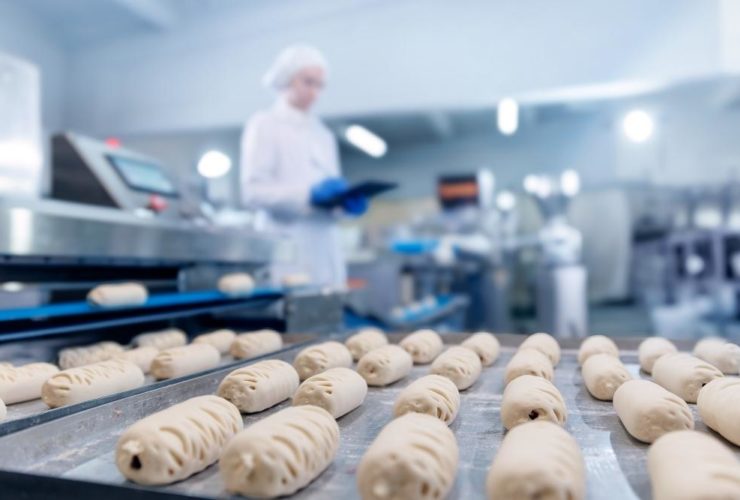


Continuous Learning in Food Manufacturing: Turning Operations into Knowledge
The best-run food factories treat knowledge as something that lives on the floor, gets refreshed regularly and compounds over time.
The difference between those operations and the ones that are constantly firefighting is usually whether the people running the lines genuinely know what they’re doing every shift.
Continuous learning in food manufacturing isn’t a new concept, but the gap between factories that talk about it and those that actually build it into how they operate is wider than most leadership teams realise.
What Continuous Learning Means on the Production Floor
Continuous learning in food manufacturing is about creating an environment where knowledge is consistently available, regularly reinforced and practically applied so that what people know on day one hasn’t eroded by month three.
This could be an operator who can answer confidently when something goes wrong rather than waiting for a supervisor, or a workforce that performs consistently across shifts, sites, and seasonal peaks.
For directors, the best roadmap is to use a training scheme that scales with the business rather than one that breaks every time headcount changes.
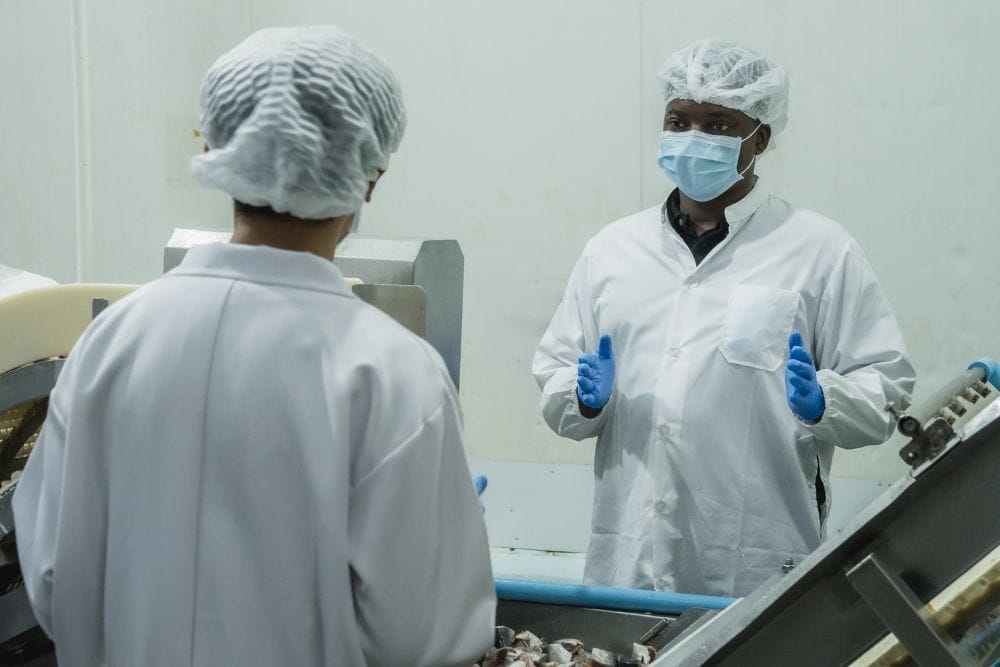
The Forgetting Curve Problem in Food Production
There’s a well-established principle in learning science that knowledge fades fast without reinforcement.
Most people forget a significant portion of what they’ve learned within days of a training session if nothing follows it up. In food production, where operators are applying that knowledge in fast-moving, high-pressure environments, the stakes of that forgetting are tangible.
An operator who was trained six months ago on allergen protocols and hasn’t revisited them since is not the same operator who completed that training. Operator knowledge retention in food production isn’t a given; it’s something that needs to be designed for.
Why One-Off Inductions Aren’t Enough
The traditional model of bringing someone in, putting them through induction, and sending them to the floor made sense when workforces were stable and processes rarely changed.
These days, most food factories today don’t look like that. Turnover is high, and agency workers cycle through regularly. Beyond personnel, processes update as lines and products change.
In that environment, a one-off induction is a great starting point, but it isn’t a long-term solution.
Knowledge Drift in Food Manufacturing
When operators aren’t regularly exposed to the knowledge they need, standards drift. This usually doesn’t happen all at once, but over time the way things get done starts to diverge from the way they should get done.
That drift has costs in time and, by extension, money.
It also shows up in product inconsistency, in near-misses, in audit findings, and in the effort supervisors spend correcting things that should be self-correcting.
How food manufacturers retain operator knowledge on the line is one of the most consequential decisions a production or operations leader makes.
Building an Always-On Knowledge Culture
The factories that get this right share a few things in common:
- They’ve stopped thinking about training as an event and started thinking about it as an environment.
- Knowledge is available when operators need it.
- Refreshers are built into the rhythm of how the factory operates.
- When processes change, the update reaches everyone consistently, not just the people who happened to be on shift that day.
Want to Know What This Looks Like in Practice?
We’ve built Foodability around this principle. Talk to us about how continuous learning fits into your production environment.
Making Knowledge Accessible at the Point of Need
One of the most practical shifts a food factory can make is moving from training that happens away from the floor to knowledge that’s available on it.
When an operator can quickly revisit a module on how to set up the multihead weigher correctly or check the allergen protocol before a product changeover, they’re not relying on memory alone. They’re supported by the system around them.
Food production training in the UK is increasingly moving away from classroom-based sessions and towards digital, on-demand content that operators can access on a phone or tablet in the moment they need it.
Reinforcement Over Time
Accessibility is one part of it, and reinforcement is the other.
The most effective continuous learning programmes in food manufacturing bring knowledge back to operators at intervals, in short, focused bursts that refresh what’s already been learnt.
This is where short-form training modules have a structural advantage.
A five-minute refresher on cleaning and disinfection procedures does more for long-term operator knowledge retention in food production than a single two-hour session that happened eight months ago. The format matches the reality of how people actually hold on to information.
The Strategic Case for Always-On Learning
For operations directors and senior leaders, the argument for continuous learning in food manufacturing is one of the best ways to build a resilient operation.
A workforce where knowledge is current, consistent, and regularly refreshed is a workforce that performs more predictably.
It’s easier to scale. It’s easier to audit. It’s better placed to absorb new starters quickly without the experienced operators around them having to pick up the slack. And it’s far less dependent on institutional knowledge sitting in the heads of a handful of long-serving team members who could leave at any point.
Consistency as an Output of Continuous Learning
One of the clearest markers of a well-trained workforce is consistency, not just whether operators know the right way to do something, but whether they do it the same way every shift, regardless of who’s supervising. That consistency doesn’t come from induction alone. It’s the output of knowledge that’s been reinforced enough times that it becomes habit.
For food production training in the UK, this is the benchmark worth aiming for. Not a trained workforce. An informed one. One where the knowledge required to run the line well isn’t a fading memory of a session they attended months ago but something they engage with regularly and apply confidently.
From Training to Knowledge Infrastructure
The shift from thinking about training as a programme to thinking about it as infrastructure is what separates the factories building genuine resilience from those that will keep having the same problems. Programmes have a start and an end. Infrastructure runs continuously.
That doesn’t necessarily mean a full overhaul. But deliberate choices about how knowledge is stored, accessed and refreshed across your workforce are crucial. So it means choosing formats that fit the floor rather than formats that fit a conference room, and accepting that operator knowledge retention in food production is an ongoing aim.
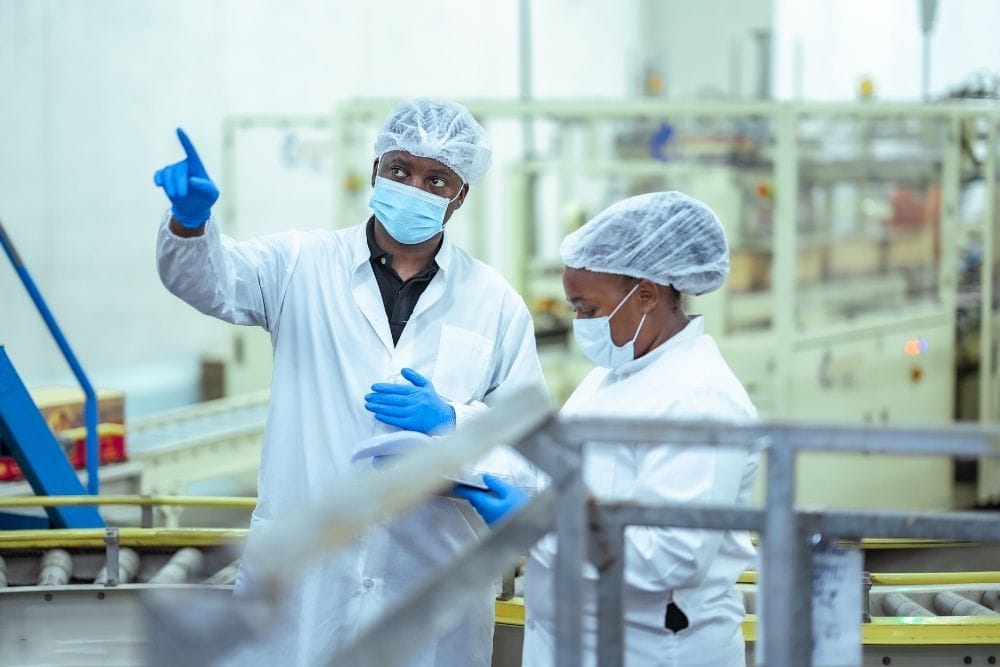
Want to Partner with a Food Factory Training Provider That’s Ahead of the Game?
At Foodability, we design training that works with your food factory team. Our modules are practical, accessible and built to last beyond induction week.
Whether you’re looking to improve consistency across shifts, get new starters up to speed faster, or make sure refresher knowledge reaches your whole team, we can help.
Take a look at our courses or get in touch to talk through what continuous learning could look like for your operation.
FAQs
What is continuous learning in food manufacturing?
Continuous learning in food manufacturing means treating operator knowledge as something that’s regularly refreshed and reinforced, not just delivered once at induction. It involves making training accessible on the floor, building in regular refreshers, and ensuring that when processes change, updated knowledge reaches every operator consistently.
How do food manufacturers retain operator knowledge on the line?
Retention improves significantly when knowledge is reinforced at intervals rather than delivered in a single session. Short, focused modules that operators can revisit on a device they already carry are particularly effective. The key is making refresher content available at the point of need, so operators aren’t relying solely on memory from a session that may have taken place months ago.
Why is operator knowledge retention a problem in food production specifically?
Food production environments are fast-moving, high-turnover, and often multilingual. Knowledge fades quickly without reinforcement, and when new starters are regularly joining the team, there’s a constant risk of standards drifting. The combination of frequent changeovers, complex compliance requirements, and shift-based working means that one-off training simply doesn’t hold long enough to maintain consistent performance.